


Symptoms of anxiety can feel scary – pounding heart, churning stomach, racing thoughts. Worry can lead to declining health, but anxiety itself won’t kill you. There’s treatment available, like therapy and medication for some, to lessen your anxiety so it feels less overwhelming and so you can live a long, healthy life.
Can Anxiety Actually Kill You?
Anxiety itself cannot kill you. Anxiety is a feeling accompanied by a physical component. The physiological changes caused by untreated long-term anxiety can lead to other illnesses that may kill you, such as high blood pressure, a weakened immune system, and increased risk for suicidal ideation and attempts. However, it takes highly elevated and long-lasting anxiety to lead to those more severe diseases, and you are capable of lowering your anxiety and finding professionals to help before it gets to that point.
Anxiety usually occurs as a result of your nervous system sensing danger when there is none, or sensing much more danger than is actually present. Your body’s natural alarm system serves an evolutionary purpose of preserving your own life and safety – when you are in danger, you run. Adrenaline kicks in, your heart pumps blood where it needs to go, your stomach is ready to empty itself to make you as lightweight as possible to run away from the threat. But when anxiety becomes pathological, your body senses something ordinary and perceives it as a threat ,” it kicks into high gear unnecessarily, and when that happens frequently, your body stays in its heightened survival state.
Long-lasting anxiety is exhausting. Your body pumps more cortisol and adrenaline than it actually needs, your heart is working overtime, your gastrointestinal system becomes stressed, and it’s hard to fall asleep and get rest. Not only are there physical symptoms, but you’re likely worried more often and about more things than usual, have difficulty thinking or concentrating, and might be more irritable than normal.
Personalized Treatment for Anxiety
Talkiatry can match you with a real psychiatrist who accepts insurance. Talkiatry psychiatrists can evaluate you for anxiety and implement a personalized treatment plan, including medication. If appropriate for you and allowed by your state, this can include controlled substances. Get started with a short online assessment.
Physical Symptoms of Anxiety
Physical anxiety symptoms can show up in lots of different ways in your life – from muscle tension and rapid heartbeat to excessive sweating and headaches. Symptoms may increase or decrease based on your current stress level or environment, but they can make it difficult to thrive on a daily basis.
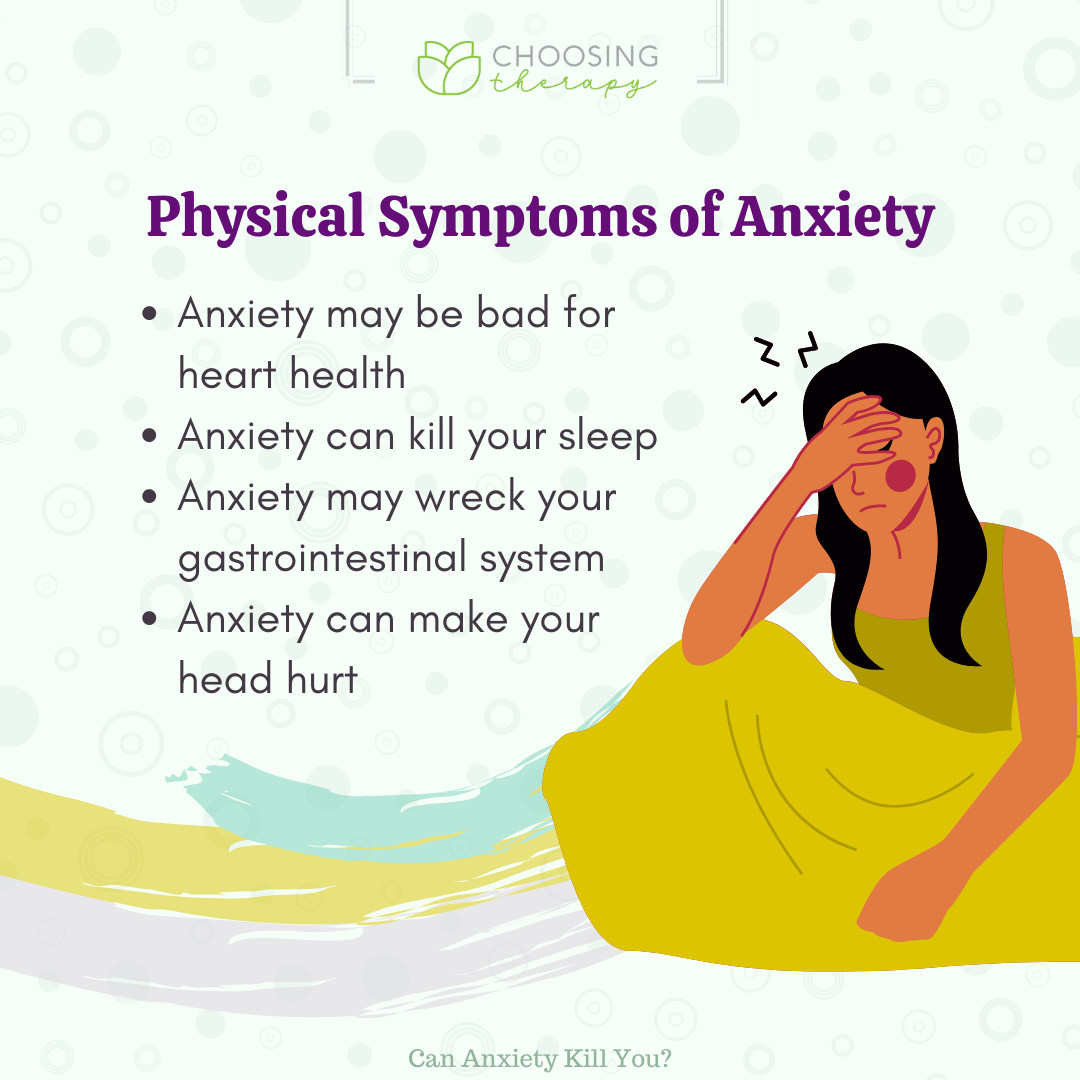
Anxiety May Be Bad for Heart Health
While a link between heart health and anxiety has been established,1 exactly how anxiety leads to cardiovascular outcomes remains unknown. It’s difficult to differentiate the risk factors that anxiety presents to heart health from those of depression, particularly since depression and anxiety often go hand-in-hand.2 More recent studies have found little to no correlation in anxiety disorders with diminished cardiac health, and the ones that have are not causal.3 So, while anxiety and poor heart health can be found together, it does not necessarily mean that one causes the other.
Anxiety Can Kill Your Sleep
Because people with anxiety spend more time than average feeling overly activated, insomnia and increased sleep problems are prevalent in anxious people.4 When you’re already in a cycle of poor sleep, anticipation of a restless night can decrease your ability to fall asleep.5 An increase in disturbing or anxious dreams and abnormal REM sleep cycles are also seen in those with anxiety disorders.4 However, many studies also point to the correlation of sleep and anxiety without pinpointing causation: sleep impacts anxious symptoms, and anxiety impacts sleep. It’s nearly impossible to tell which causes which.
Anxiety May Wreck Your Gastrointestinal System
Your brain and your gut are connected through the gut-brain axis and as a result, digestion and the brain are closely linked. Think about having “butterflies in your stomach” or the phrase “my stomach dropped.” We often talk about our gut feelings without realizing that these feelings are directly linked to our brain. There are mixed ideas about whether anxiety or other psychological distress causes GI discomfort or vice versa.6,7 One study indicates that psychological symptoms often cause gut symptoms, and thus, with proper treatment for anxiety, preventing GI distress may be possible.8
Anxiety Can Make Your Head Hurt
Migraines are severe headaches often accompanied by nausea and/or sensitivity to light and sound. Migraines can be triggered by increased stress. While anxiety is not the sole cause of migraines, there is up to a fuor times higher prevalence of anxiety in those individuals who have migraines compared to the general population.9
Options for Anxiety Treatment
Talk Therapy – Get help from a licensed therapist. Betterhelp offers online therapy starting at $60 per week and is FSA/HSA eligible by most providers. Free Assessment
Psychiatry for Anxiety – Looking for anxiety treatment that prioritizes you? Talkiatry can help. Find an in-network psychiatrist you can see online. Get started with our short assessment. Visit Talkiatry
What Happens If Anxiety Is Left Untreated?
When anxiety is left untreated, it can wreak havoc on your life and do damage to your body. Increased cortisol and adrenaline are helpful when you are in a situation where survival instincts are warranted, but when your alarm system is triggered by a variety of non-threatening situations, it’s chronically overstimulated.
This chronic overstimulation caused by anxiety can lead to:
- Weight loss or gain
- High blood pressure
- Increased risk for other mental illnesses such as depression
- Insomnia
- Increased risk of suicide
- Constant irritability
- Muscle tension
- Trouble concentrating
- Headaches
- Gastrointestinal symptoms
- Feeling restless
- Panic attacks
Can Untreated Anxiety Cause Brain Damage?
Untreated anxiety won’t necessarily cause brain damage, but it can lead to permanent structural changes in the brain.10 Decreased functioning in the prefrontal cortex (the part of the brain associated with executive functioning, attention, memory, and language), as well as in the anterior cingulate cortex (which impacts emotion regulation, decision-making, and impulse control), are both associated with anxiety disorders.11 Decreased connection between the PFC and amygdala (the part of your brain involved with regulating emotions such as fear) is also common in people who have anxiety disorders. However, studies show that it’s possible to increase functioning in these brain areas if anxiety is appropriately treated.12
Can I Die From a Panic Attack?
You can’t die from a panic attack, although you’ll probably feel like you’re dying.
Some combination of the following symptoms are present during a panic attack:
- Pounding or accelerated heartbeat
- Sweating
- Shaking
- Shortness of breath
- Choking sensation
- Chest discomfort
- Nausea or abdominal distress
- Dizziness
- Feeling hot or cold
- Numbness or tingling sensations
- Feeling as though you are detached from yourself or not in reality
- Fear of losing control or going crazy
- Fear of dying
While panic attacks are intense, they are short, typically lasting between 5 and 20 minutes. You may think you’re having a heart attack, which can be deadly, as the symptoms are similar, (like chest discomfort, feeling dizzy or faint, and shortness of breath).


Anxiety Workbook
Our workbook contains our best anxiety worksheets, designed to help you understand your anxiety, develop effective coping skills, and better manage challenging moments.
What to Do When You’re Having a Panic Attack
When you recognize that you’re having a panic attack, the most important thing you can do in that moment is to ground yourself. There are mental and physical strategies for grounding. Try some of each when you’re not having a panic attack and determine which grounding strategies help improve your anxiety. If you find grounding strategies that help, practice them so you can use them during your next panic attack.
Here are some grounding techniques to try during a panic attack:
- Ground yourself using the 5-4-3-2-1 method: 5 things you can see, 4 things you can feel, 3 things you can hear, 2 things you can smell, 1 thing you can taste. Let your five senses ground you back into the present moment and out of panic.
- Do some conscious breathwork: Use diaphragmatic breaths to bring your body back from its panicked state. Breath in through your nose and out through your mouth. Lay down if you need to, and make sure you can see the rise and fall of your stomach and chest. Breathe with only your belly, making it go up as high as you can, while making sure your chest stays flat.
- Temperature change: Hold an ice pack on your face, splash your face with cold water, take a cold shower – anything to shock your body back into regulation.
- Remind yourself of what’s true:
- This feels awful, but it will not kill me.
- These feelings will pass.
- I have survived this before, and I can do it again.
Coping With an Anxiety Disorder
There are many ways to cope with anxiety, some of which work better for the short-term than the long term. Long-term coping strategies typically involve changing your thinking, often with the help of a therapist, and practicing other coping strategies during acute moments of anxiety. Important long-term coping includes being mindful of the food you eat and making sure to get some good vitamins in your body, as well as getting as much restful sleep as you need.
Some in-the-moment examples of how to calm anxiety include:
- Challenge your thoughts: What’s the evidence for or against your anxious thoughts? Are there any alternative options? What would you say to a friend having this thought?
- Fidget toys: Keeping your hands busy can expel anxious energy.
- Use your 5 senses:
- Touch – plant your feet firmly into the ground, notice the temperature in the air around you
- Smell – light a candle with your favorite scent, or take a scented bubble bath
- Taste – chew some minty gum or treat yourself to your favorite dessert
- See – look at photos that make you feel happy, or watch your favorite TV show
- Hear – listen to music you enjoy, or turn on some white noise
- Practice mindfulness: Practice being present in your circumstances. Notice thoughts you have and let them pass by without grabbing on to them. If you have trouble with this on your own, you could try a meditation app for some structured mindfulness time.
- Schedule your worry time: Try setting aside 5-10 minutes a day specifically to worry (sometimes called activity scheduling)
- Exercise: Get your body moving in order to increase your mood. Exercise increases dopamine and serotonin which are known to improve your mood.
- Embrace your inner child: Blow bubbles, color, do something fun!
Anxiety Disorder Treatment
Anxiety might have wrecked your life, but it doesn’t have to control your life. If you’re seeking freedom from anxiety, here are some options you might try.
Therapy
There are so many types of therapy for anxiety that it may feel overwhelming to decide what treatment fits you best. If you’re someone who prefers structure or wants consistent homework based on a more step-by-step plan, something like Cognitive Behavioral Therapy (CBT) might be a good fit. The most structured form of CBT is Dialectical Behavioral Therapy (DBT), which involves working through specific modules in order to enhance emotion regulation and to tolerate distress that feels unmanageable with anxiety. Exposure therapy also falls under the CBT umbrella and aims to reduce fears naturally as you learn, through exposing yourself to your anxiety trigger, that you’re able to handle the fear.
Less structured therapeutic options involve Acceptance and Commitment Therapy (ACT), which seeks to help you live a meaningful life even in the face of difficult emotions. Psychodynamic therapy, which is typically the least structured, can also be used to alleviate anxiety symptoms by exploring past experiences for insight into current symptoms and behaviors. Psychodynamic therapy can be helpful to do alongside CBT, by helping you understand where some of your anxious thoughts and feelings originated.
Medication
Medication can help to reduce anxiety symptoms, but is usually not a quick fix. Medication is also most effective when taken in conjunction with regular therapy. Most anxiety medication works by increasing some combination of brain chemicals linked to mood. Selective serotonin reuptake inhibitors (SSRIs) and serotonin-norepinephrine reuptake inhibitors (SNRIs) are the most commonly prescribed medications for moderate to severe anxiety. They often take several weeks for their full effects to be felt, and each of them interacts differently with your body and has different side effects. Benzodiazepines are another option for anxiety due to their quick calming effects, but they are not a long-term solution due to their propensity to become addictive.
If you choose to incorporate medication to help treat your anxiety, make sure to enlist the help of a knowledgeable provider who can work with you to find the right medication and dosage for you. If you’re prescribed an SSRI or SNRI, it’s important to take the medication consistently and as prescribed in order to reap the intended effects of decreased anxiety. Track your anxiety symptoms and possible side effects so you’re able to discuss the impact of medication with your provider.
Personalized Treatment for Anxiety
Talkiatry can match you with a real psychiatrist who accepts insurance. Talkiatry psychiatrists can evaluate you for anxiety and implement a personalized treatment plan, including medication. If appropriate for you and allowed by your state, this can include controlled substances. Get started with a short online assessment.
How to Help Someone With Anxiety
If someone you know is struggling with anxiety, there are ways to support them. Try listening without judgment (anxiety is often, by definition, irrational!) and validate their feelings. See if you can think of a time where you felt something similar to what the other person is describing, and tap into the empathy your own experience provides. Try to be a calm presence for them and remind them of ways they can cope with anxiety. Finally, make sure you’re able to take care of yourself and not get carried away by their anxieties. Know your own limits, and help your anxious friend get the professional help they need.
Final Thoughts
While you won’t die from your anxiety or from a panic attack, it’s important to get help if anxiety is affecting your life. If your worries feel hard to control, you’re experiencing panic attacks, or some of the physical symptoms associated with anxiety are beginning to control your ability to enjoy your daily activities, it may be time to seek help.
Can Anxiety Kill You Infographics
Additional Resources
To help our readers take the next step in their mental health journey, ChoosingTherapy.com has partnered with leaders in mental health and wellness. ChoosingTherapy.com is compensated for marketing by the companies included below.
Personalized Treatment for Anxiety
Talkiatry – can match you with a real psychiatrist who accepts insurance. Talkiatry psychiatrists can evaluate you for anxiety and implement a personalized treatment plan, including medication. If appropriate for you and allowed by your state, this can include controlled substances. Get started with a short online assessment.
Therapy for Anxiety & Medication Management
Brightside Health – develops personalized plans that are unique to you and offers 1 on 1 support from start to finish. Brightside Health accepts United Healthcare, Anthem, Cigna, and Aetna. Appointments in as little as 24 hours. Start Free Assessment
Learn Mindfulness, Meditation, & Relaxation Techniques
Mindfulness.com – Change your life by practicing mindfulness. In a few minutes a day, you can start developing mindfulness and meditation skills. Free Trial
Anxiety Newsletter
A free newsletter from the experts at ChoosingTherapy.com for those impacted by anxiety. Get helpful tips and the latest information. Sign Up
ChoosingTherapy.com Directory
Find local therapists that offer online and in-person therapy. Search for therapists by specialty, experience, insurance, and location. Find a therapist near you.
For Further Reading

Online Anxiety Test
Answering a few questions can help you understand your symptoms and give you a recommendation for what to do next.
Best Online Therapy for Anxiety
Anxiety is one of the most prevalent mental health issues in the world. To find the best online therapy for anxiety, we reviewed over 50 providers. Our evaluation focused on their geographic coverage area, cost, convenience, extra features, and more. Our top recommendations are based on more than three years of research and over 250 hours of hands-on testing. Read on to see our top picks for the best online anxiety counseling platforms.
Best Online Psychiatry Services
Online psychiatry, sometimes called telepsychiatry, platforms offer medication management by phone, video, or secure messaging for a variety of mental health conditions. In some cases, online psychiatry may be more affordable than seeing an in-person provider. Mental health treatment has expanded to include many online psychiatry and therapy services. With so many choices, it can feel overwhelming to find the one that is right for you.

